Before & After: A Website Optimization Case Study
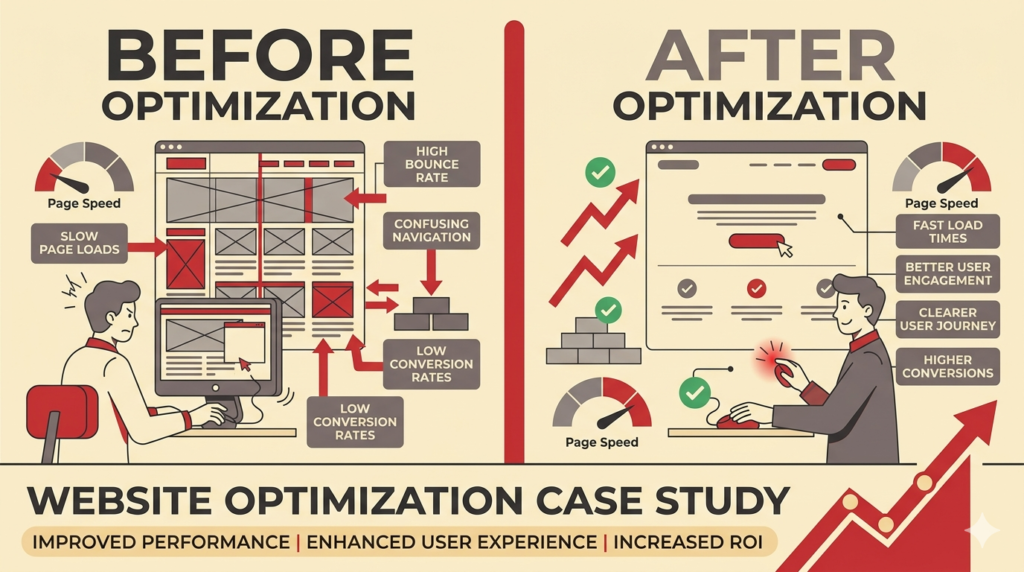
How small website improvements can create big business results.
Many businesses invest heavily in digital marketing, SEO, and social media campaigns but overlook one critical factor: their website’s performance.
A website is often the first interaction a potential customer has with a brand. If it’s slow, confusing, or difficult to navigate, visitors leave before taking action.
In this case study, we’ll explore how website optimization transformed a business’s online presence and improved its overall performance.
The Challenge
A growing business approached us with a common problem:
Despite running marketing campaigns and generating traffic, the website wasn’t converting visitors into leads or customers.
The major issues included:
- Slow loading speed
- Poor mobile responsiveness
- Complicated navigation
- Weak call-to-action placement
- Outdated design
- Low engagement rates
The website was attracting visitors but failing to deliver a seamless user experience.
The “Before” Snapshot
Here’s what we discovered during the website audit:
Website Speed
Pages took several seconds to load, leading to higher bounce rates and frustrated visitors.
Mobile Experience
The website was not fully optimized for mobile users, causing layout issues and poor usability.
User Journey
Visitors struggled to find important information due to cluttered menus and inconsistent page structures.
Conversion Elements
Call-to-action buttons were difficult to find, reducing inquiry and lead-generation opportunities.
SEO Performance
Technical SEO issues limited search visibility and impacted organic traffic growth.
The result?
Traffic was coming in, but conversions remained low.
The Optimization Strategy
To improve performance, we focused on five key areas:
1. Speed Optimization
We improved loading times by:
- Compressing images
- Removing unnecessary scripts
- Enabling browser caching
- Optimizing website assets
A faster website creates a better user experience and improves search rankings.
2. Mobile-First Design
With the majority of users browsing on mobile devices, we redesigned critical pages to ensure:
- Responsive layouts
- Faster mobile loading
- Better readability
- Easy navigation
3. Improved User Experience (UX)
We simplified the website structure by:
- Streamlining navigation menus
- Organizing content clearly
- Reducing clutter
- Improving visual hierarchy
Visitors could now find information more quickly and easily.
4. Stronger Call-to-Actions
Strategic CTA placement encouraged users to take action through:
- Clear contact buttons
- Lead-generation forms
- Service inquiry sections
- Prominent conversion points
5. Technical SEO Enhancements
We addressed SEO issues by:
- Optimizing metadata
- Improving page structure
- Fixing technical errors
- Enhancing internal linking
These improvements helped search engines better understand and index the website.
The “After” Results
Following optimization, the website experienced significant improvements.
Faster Performance
Pages loaded noticeably quicker, creating a smoother browsing experience.
Better Mobile Engagement
Users spent more time on the site and navigated more effectively across devices.
Increased User Interaction
Visitors explored more pages and engaged with content more frequently.
Higher Conversion Rates
Clear CTAs and an improved user journey led to more inquiries and business opportunities.
Stronger Search Visibility
Technical SEO improvements supported better organic performance over time.
Key Takeaways
This case study highlights an important lesson:
More traffic alone does not guarantee success.
A website must be designed to guide visitors toward meaningful actions.
Website optimization isn’t just about aesthetics—it’s about creating an experience that supports business growth.
By focusing on speed, usability, mobile responsiveness, and conversion optimization, businesses can unlock the full potential of their digital presence.
Why Website Optimization Matters in 2026
Today’s users expect:
- Fast-loading websites
- Mobile-friendly experiences
- Clear navigation
- Easy access to information
- Seamless customer journeys
If your website fails to meet these expectations, potential customers may leave before ever contacting you.
Optimization is no longer optional—it’s a competitive advantage.
Final Thoughts
A well-optimized website can transform how users interact with your brand.
The difference between a struggling website and a high-performing one often comes down to strategic improvements that enhance user experience and drive conversions.
Sometimes, small changes create the biggest results.
Ready to Transform Your Website?
As a Digital Marketer, I help businesses improve website performance through SEO, user experience optimization, conversion-focused design, and digital growth strategies.
Whether your website needs a complete overhaul or targeted improvements, I can help turn visitors into customers.